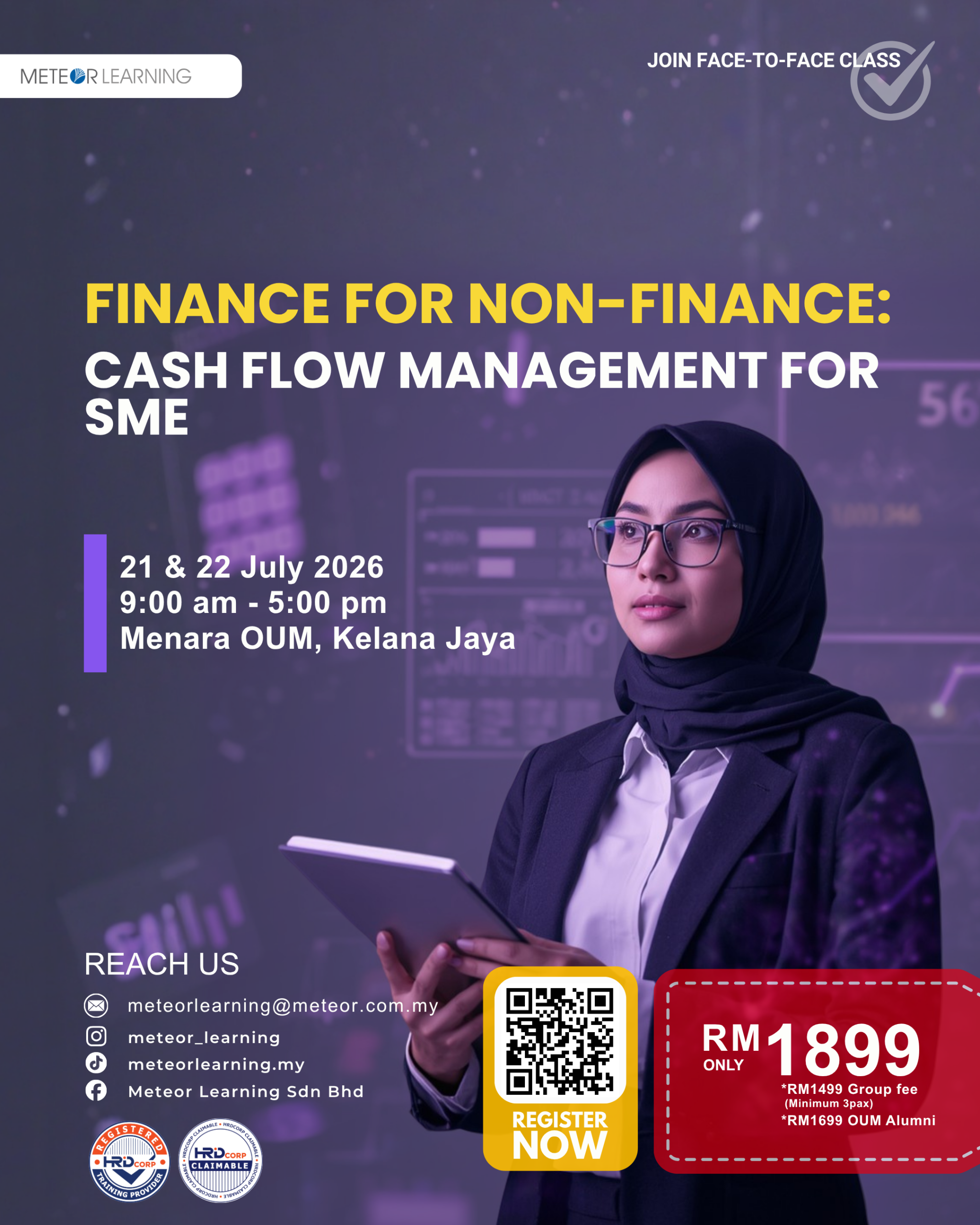
FINANCE FOR NON-FINANCE : CASH FLOW MANAGEMENT FOR SME
OVERVIEW
Managing subordinate’s performance requires the Head of Department and People Managers to equip themselves with multiple competencies including managing performance and monitoring discipline. Performance Management means creating both competence and growth for employees. Effective Performance Management incorporates a series of ongoing assessments, processes and activities that encourage growth and measure progress in attaining objectives. Good Performance Management focuses on developing others. This workshop will help in assessing performance and making decisions to develop the performance of others. Managing performance comes with greater responsibility for the work output and progress of others. Following the process will help you grow the skill to evaluate others. Identifying areas that require either correction of performance or development of skills is crucial to a productive workforce. Management at all levels needs to be able to coach and counsel toward desired outcomes to prevent formal disciplinary steps
LEARNING OUTCOMES
Shared a common understanding on how performance management systems can be effectively utilized to raise the performance of individuals and teams
- Devise “SMART” annual performance objectives (e.g., objectives that are specific, measurable, attainable, relevant, and trackable).
- Enhanced their skills in setting clear expectations and objectively measuring individual performance using objectives and competencies as key measures.
- Identified and practiced some performance management strategies and techniques to enhance the performance and motivation in under-performing and high performing team members using proven coaching techniques.
- Practice giving and receiving objective and constructive performance feedback with confidence and reduced anxiety.
COURSE OUTLINE
THE PRINCIPLES OF PERFORMANCE MANAGEMENT
- Introduction to Performance Management Framework
- Performance Management Cycle and Purpose of Performance Review
- Pitfalls in Managing Performance
PERFORMANCE PLANNING
- Setting performance standard or measures
- Setting “SMART” Annual Objectives
- Communicating performance objectives
PERFORMANCE REVIEW AND APPRAISAL
- Roles of Manager and Employee in Performance Review
- Objectively assessing and rating performance
- Manager’s approach for managing different performance level – Star Performer, Mediocre Performance and Low Performer.
PERFORMANCE COACHING
- Using GROW Coaching Model as Performance Development
- Ethics in Coaching
- Creation of Safety Net in Coaching
ONE TO ONE PERFORMANCE REVIEW MEETINGS
- Preparation for the Annual Performance Review Meeting
- Conducting the Annual Performance Review meetings
- Giving constructive and motivational feedback
- Using questions to help employees review their own performance
- Handling challenging situation
PERFORMANCE AND CAREER DEVELOPMENT
- Roles of Manager and Employee in Performance Development Plan
- Analysing the performance gaps
- Providing appropriate coaching methodology to close the performance gaps
- Identifying horizontal and vertical career development
PROGRESSIVE DISCIPLINE
- Progressive discipline steps
- Dismissal for misconduct
- Consultation and documentation
MANAGING POOR PERFORMER
- Concept of Performance Improvement Program (PIP)
- Roles and Responsibilities in Managing PIP
- Action Plan in Managing PIP
CONSEQUENCES MANAGEMENT
- Consequences of Por Performer
- Managing Termination of Employment due to Poor Performance
- Roles and Responsibilities in Termination
METHODOLOGY
- Lecture
- Group Discussions
- Case Studies
- Q&A Sessions
- Hands-on Activities
- Project Discussion